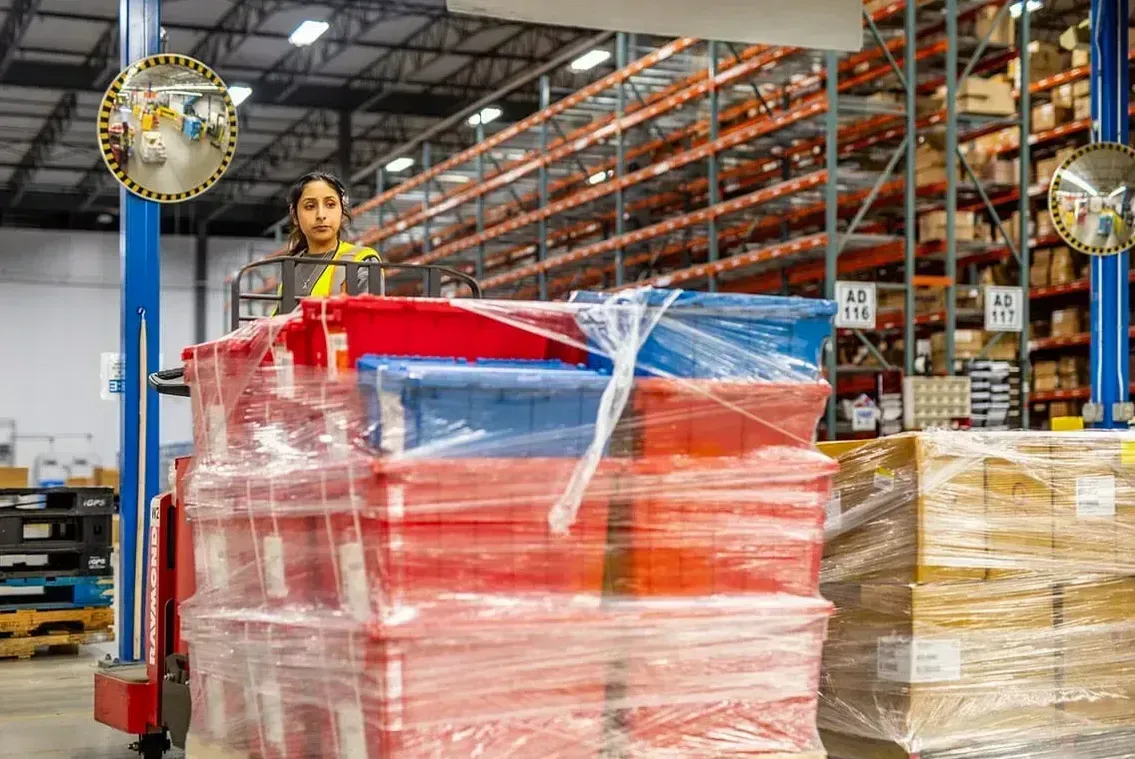
As natural disasters and unforeseen crises become more frequent, the invisible machinery of the healthcare supply chain is stepping into the spotlight. To mark National Healthcare Supply Chain Week, Cardinal Health has shared a detailed look at how its vast network of nearly 50 distribution sites across North America manages everything from sudden wildfires to historic snowstorms. For the company, these efforts are about more than just logistics; they are about ensuring that surgeons have their tools and nurses have their supplies even when the world outside is in turmoil.
Over the last year, the company’s Global Medical Products and Distribution team faced a gauntlet of challenges. In British Columbia, logistics experts tracked over 100 active wildfires, rerouting freight around closed highways to prevent medicine shortages. Meanwhile, in Florida, the focus shifted to proactive storm prep, where Cardinal Health provided clinics with readiness checklists and optimized transport routes long before hurricanes made landfall. Whether dealing with record snowfall in North Carolina or unexpected warehouse fires in California, the goal remained constant: keeping clinical care uninterrupted.
The company’s resilience was perhaps most evident when it stepped in during systemic failures beyond its own control. When a competitor’s warehouse burned down in Northern California and a southeastern health system lost its primary distribution hub due to an emergency closure, Cardinal Health mobilized cross-functional teams to fill the void. By expanding staff at nearby centers and hunting down urgent items like anesthesia kits through inventory reallocation, they prevented potential gaps in patient care that could have led to cancelled surgeries or delayed treatments.
Sherrick Orie, vice president of North America operations for GMPD, emphasizes that this level of reliability requires constant investment in infrastructure and technology. From backup generators to satellite communications and pre-arranged fuel contracts, the redundancies are designed so that a local disaster doesn’t become a medical crisis. As Kelly Peterson noted regarding their response efforts, every shipment delivered under pressure represents something far greater than a product moving from point A to point B—it is fundamentally about helping clinicians save lives.