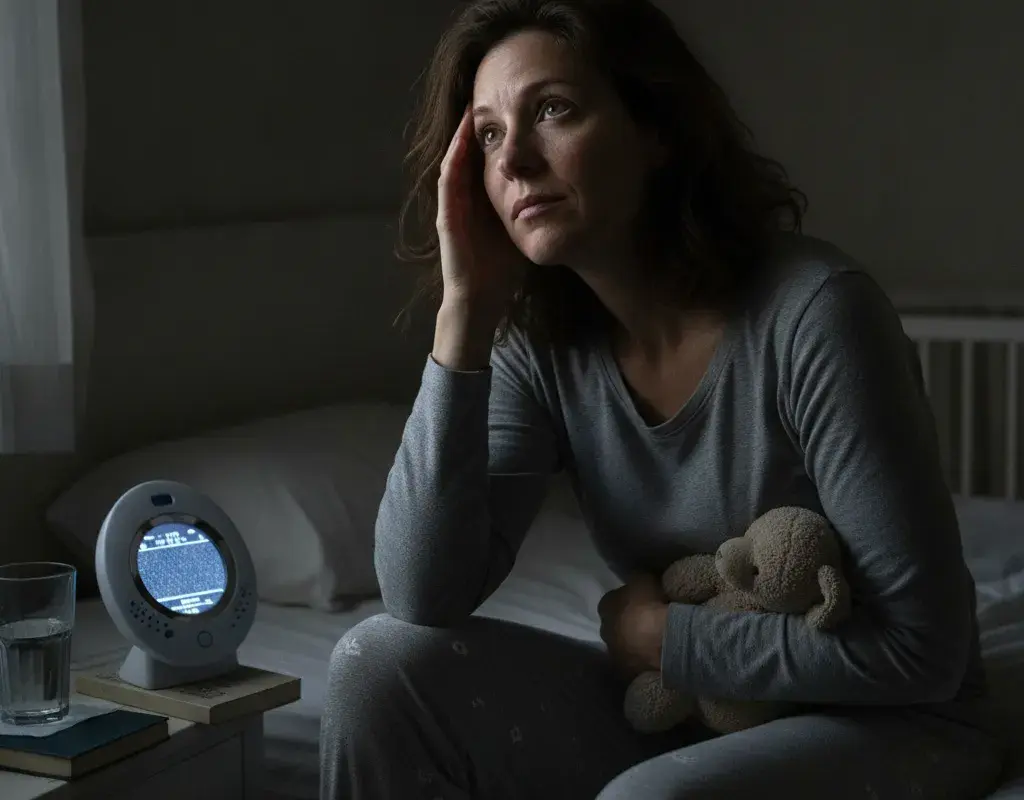
Even with a perfect nighttime routine, there are those frustrating hours of the early morning when sleep simply refuses to return. Whether it is a toddler waking you up at two in the morning or a sudden surge of anxiety about tomorrow’s schedule, the harder you try to force sleep, the further away it seems to drift. While many people default to counting sheep, experts suggest a more modern approach called cognitive reshuffling, a technique rooted in cognitive behavioral therapy designed to scramble the stressful loops our brains often run during insomnia.
The process is deceptively simple and acts as a form of mental distraction. To practice it, you choose a neutral word and then visualize unrelated objects that begin with each letter of that word. For example, using the word bedtime, you might imagine a ball, then a banana, then a boat before moving on to an elephant or an envelope. According to Dr. Thea Gallagher of NYU Langone Health, the key is randomness. By focusing on these neutral images, you occupy enough of your brain’s attention to crowd out emotional triggers and worry without overstimulating yourself into full alertness.
Medical professionals view this method as a way to lower the performance anxiety associated with sleeplessness. Dr. Christopher Winter explains that instead of obsessing over how many hours of rest remain before dawn, the mind focuses on something trivial. It functions similarly to counting backward from one thousand by sevens, serving as a bridge that helps people stop actively trying to sleep and instead allows them to slide into it naturally by reducing mental arousal.
However, the effectiveness of cognitive reshuffling can depend entirely on your personality. Some users find that their competitive nature kicks in, turning the search for unique words into an intellectual challenge rather than a relaxation exercise. If searching for an R-word becomes an aggressive quest for perfection rather than a calm visualization, it may inadvertently keep you awake longer. While doctors emphasize that chronic sleep issues require professional medical intervention for long term solutions, this viral mental game remains a handy tool for those occasional nights when the mind just won’t shut off.