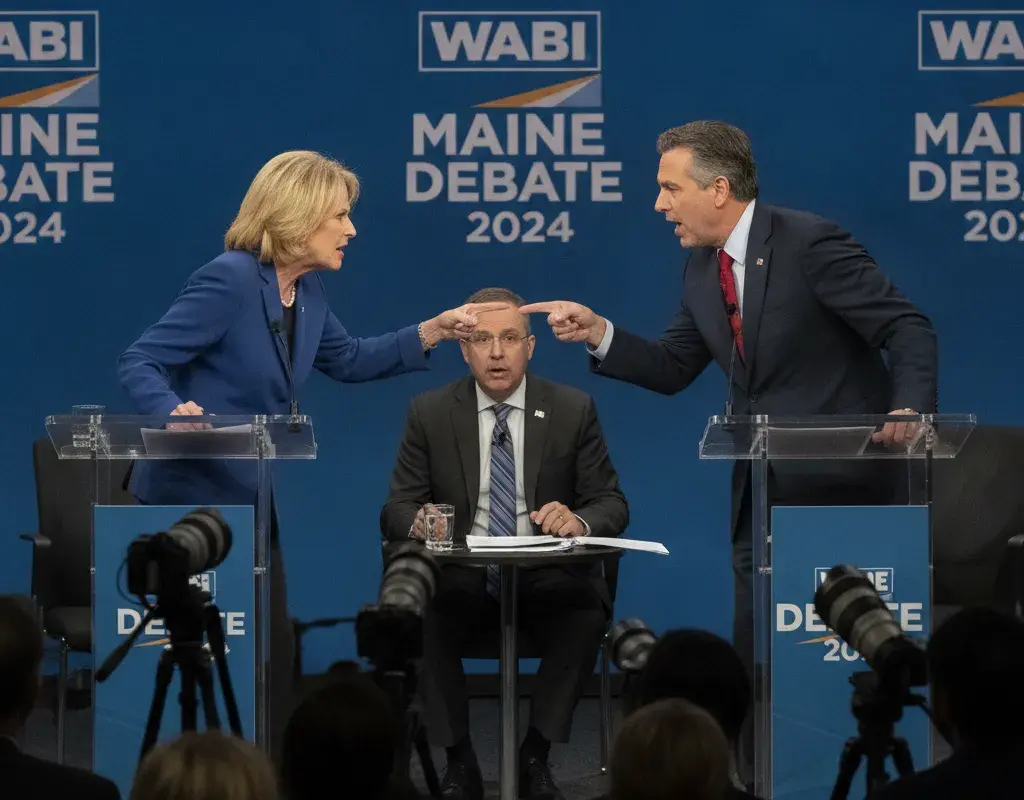
U.S. Senator Susan Collins and her Democratic challenger Troy Jackson clashed during their third televised debate on Tuesday night, turning a wide range of policy issues into personal confrontations. Hosted by WABI and WAGM in Bangor, the event focused heavily on the immediate financial pressures facing Maine families, specifically the looming rise in heating fuel costs. While Collins pointed toward state leadership in Augusta as the reason for some of the highest electricity rates in the nation, Jackson argued that global instability and conflicts abroad were the true drivers of inflation, questioning whether federal subsidies provide any long term relief for struggling residents.
The tension escalated when the conversation shifted to foreign policy and government spending. Jackson targeted Collins’ role as chair of the Appropriations Committee, suggesting that her claims of opposing conflict are hollow if she continues to oversee its funding. This sparring continued into a heated exchange over healthcare and ethics, where Collins criticized a lack of fraud detection in state programs only to be met with a sharp retort from Jackson regarding an FBI investigation involving the senator herself.
Beyond domestic disputes, the candidates touched upon the growing concern over data centers and their potential strain on Maine’s electrical grid. They also found rare common ground in their opposition to Canadian import tariffs, though they disagreed sharply on who possesses the actual leverage to protect local industries. Collins touted her ability to negotiate specific exemptions through her seniority, while Jackson insisted that such trade wars should have been avoided entirely by congressional leadership.
The evening concluded with a dispute over campaign finance and transparency. Collins pressed her opponent over missing Federal Election Commission reports, claiming voters remain in the dark about who is funding Jackson’s bid for office. In response, Jackson promised to release those documents immediately while pivoting to criticize the influence of billionaire donors supporting the incumbent’s reelection effort.