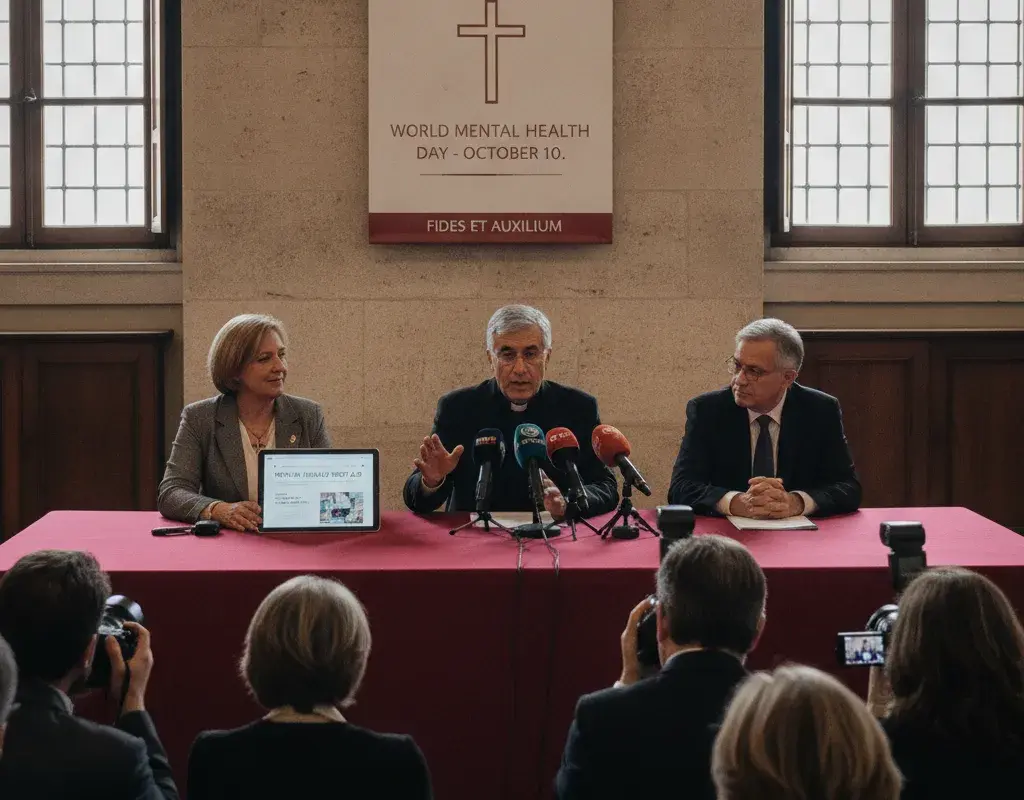
In a move to bridge the gap between spiritual guidance and psychological support, a U.S. based Catholic association has launched two new online courses designed to help ordinary parishioners recognize and respond to mental health crises. Unveiled during a news conference at the Vatican on World Mental Health Day, these resources aim to equip laypeople with the tools to offer genuine companionship to those struggling with depression, addiction, and trauma without relying on empty platitudes.
The initiative acknowledges a common struggle within church communities where well meaning individuals often avoid helping because they fear saying the wrong thing or lack formal training. One hour long course focuses on general mental health literacy, while a second, more intensive module teaches psychological first aid. According to Deacon Ed Shoener, president of the International Association of Catholic Mental Health Ministers, the goal is not to turn parishioners into licensed therapists but to teach them how to patch someone up emotionally and guide them toward professional clinical care.
To make the training practical, the lessons feature realistic scenarios filmed at a parish in Chicago using professional actors to demonstrate effective ways of supporting others versus mistakes commonly made in these delicate situations. This push comes at a critical time, as data suggests that in a typical American parish of five hundred people, over one hundred may be living with some form of mental illness. By teaching believers how to look, listen, and link people to resources, the organization hopes to integrate mental health awareness into the very fabric of parish life.
The launch aligns with broader efforts from the papacy to dismantle the stigma surrounding psychiatric struggles. In his prayer intentions for October 2026, Pope Leo XIV called for the Church to become a safe harbor where no one is excluded or judged due to their mental state. He urged Christians to seek forgiveness for past instances of discrimination and emphasized that compassion must lead the way in creating a community that listens without fear and supports those in pain through both faith and science.