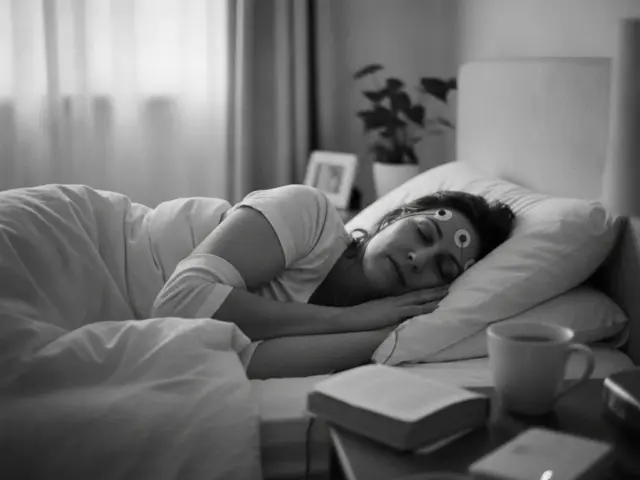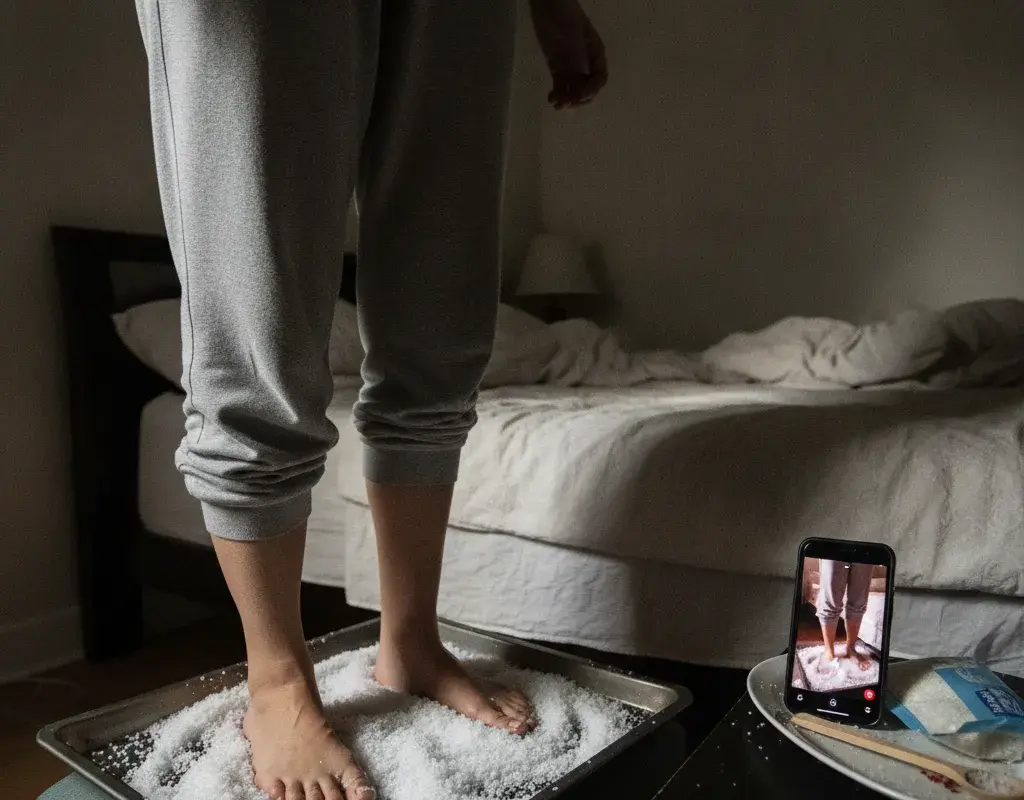
For anyone who has ever stared at a bedroom ceiling at three in the morning, the temptation to try an unorthodox remedy is powerful. From mouth taping to magnesium cocktails, social media users are constantly hunting for the magic bullet of insomnia. The latest craze to emerge from TikTok is salt stomping, a practice involving spreading Epsom or sea salt on a baking tray and standing on it with bare feet for ten minutes before bed. Proponents claim the act grounds the body and shifts the nervous system into rest mode while providing a convenient exfoliation for the soles of the feet.
Putting the theory to the test reveals that the experience is perhaps less Zen and more messy. In practice, spending several nights stomping through grains of salt offers little more than a salty floor and slightly smoother heels. For those who generally sleep well, there is no noticeable improvement in sleep quality, and for others, the stress of cleaning up the scattered crystals may outweigh any calming effects provided by the tactile sensation. While it functions as a makeshift pedicure, it hardly feels like a medical breakthrough.
Medical professionals are equally skeptical about the science behind the stomp. Dr. W. Christopher Winter describes it as another entry in a long line of absurd digital wellness trends, noting that there is zero credible research suggesting that standing on salt improves sleep architecture. Similarly, sleep specialist Dr. Angela Holliday-Bell suggests that any benefit felt by practitioners is likely due to a placebo effect or the simple act of disconnecting from screens for ten minutes rather than any biological property of the salt itself. She warns that coarse salt can even be hazardous for those with sensitive skin or neuropathy.
Ultimately, experts suggest skipping the kitchen trays and sticking to proven hygiene habits for better rest. Rather than relying on viral hacks, doctors recommend maintaining a consistent wake time, increasing sunlight exposure in the morning, and dimming lights hours before bed to naturally signal to the brain that it is time to wind down. While salt stomping might provide a momentary distraction or a bit of scrubbing action, true sleep health requires established routines rather than TikTok rituals.